“Welcome to the world”. When you were born – the first emotion you were introduced to was crying. Over time, as you start growing up and interacting with the world, you learn other emotions like – feeling happy, loving, confident, inspired, cheerful, interested, grateful, or included.
These emotions are expressed as reactions to what you feel inside with respect to your fortunate and your not-so-fortunate life events. But consider this right now – have you wondered if sometimes your reactions are uncalled for? Regretting after spending the day in sadness due to an unlikeable act someone did with you, or raging over a third person because you were angry about something on the second person?
Welcome to the world again, these are called Refractory Emotions(according to the World Dictionary – refractory means resisting control or authority, stubborn, unmanageable). Refractory Emotions are stubborn, unmanageable emotions.
Let’s understand Refractory Emotions using the reference of a person.
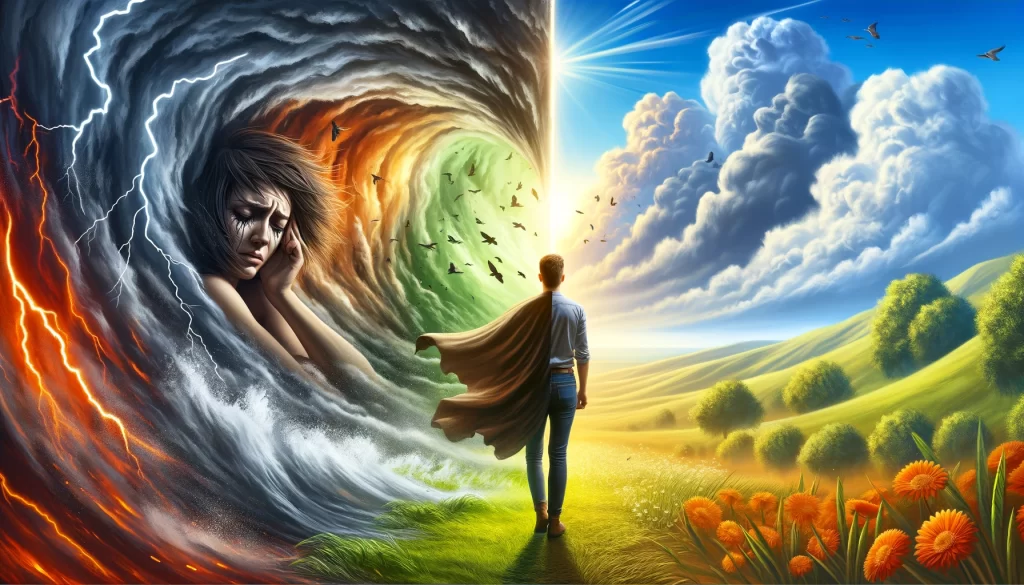
See that person had a reaction to a bad circumstance that happened to him; that reaction produces a refractory period of chemicals and emotions.
If the person doesn’t know how to control the refractory period, it lasts for Hours or Days – it’s called a ‘Mood’.
The same refractory period goes on for Days and Weeks – now it’s called a ‘Temperament’.
The refractory period goes on for Years – now it has become a ‘Personality Trait’.

And most people define their personalities based on what other people did – “I am this way because my wife cheated on me”.
What those people are actually saying is – “I haven’t changed in 5 years”
Did you understand why it happened?
It happens because that person gave their vital life force to the third person who did something to them once.
So, the Stronger the Emotion they feel; the Stronger they pay Attention to the Cause.
Where you place your Attention is where you place your Energy.
If the person gives their life force to the circumstance, how are they supposed to heal?
When that person takes their attention off their Past and focuses on themselves; denaturing the Identity that’s built on that past circumstance – placing their attention on healing, is when they heal and control their refractory emotions.
The circumstance is not the cause of their long-suffering. They are using the person or the circumstance to reaffirm their addiction to that emotion.
The learning from this person’s experience is circumstances do happen in our lives; and while we have no control in stopping them from happening; the refractory period should be in our control, the repeated reaction to a circumstance occurring once is a muscle that we should build.
The muscle is built, the life will be our creation instead of just happening to us.